
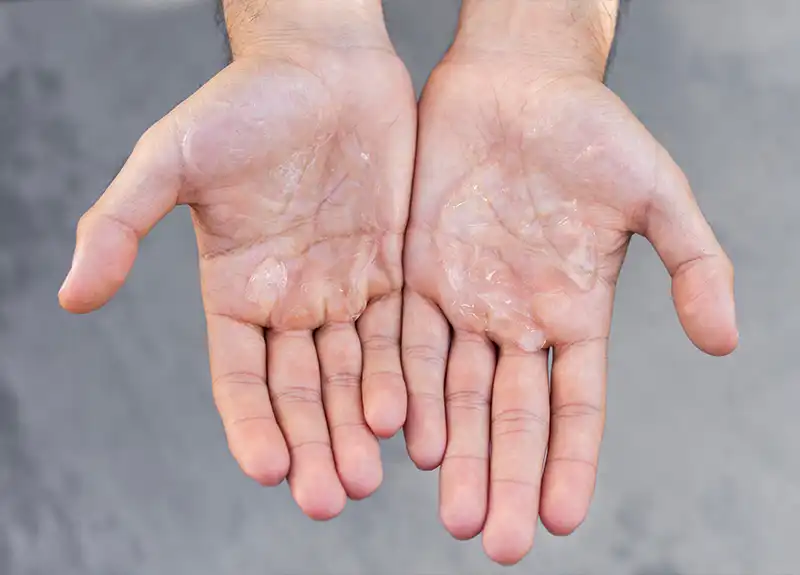
Sweating is a completely natural and necessary function that keeps our bodies cool. However, for some individuals, the body’s cooling system acts like a faulty faucet that won’t turn off. If you experience severe, unpredictable sweating that interferes with your daily life, you might be dealing with Primary Hyperhidrosis.
What is Primary Hyperhidrosis?
Primary hyperhidrosis is a medical condition characterized by excessive sweating that is not caused by physical activity, heat, or another underlying medical condition. It typically targets specific areas of the body, most commonly:
- The palms of the hands (Palmar hyperhidrosis)
- The soles of the feet (Plantar hyperhidrosis)
- The underarms (Axillary hyperhidrosis)
- The face and head (Facial hyperhidrosis)
Unlike standard sweating, it usually happens on both sides of the body equally and often stops while you sleep. While the exact cause isn’t fully understood, it is linked to overactive signals from the nervous system to the sweat glands, and it often runs in families.
Treatment options:
Before exploring surgery, patients are always encouraged to try conservative, non-invasive treatments. These are excellent first-line steps and include:
- Prescription Antiperspirants: Clinical-strength formulas containing aluminum chloride to temporarily block sweat pores.
- Botox Injections: Injections that temporarily block the nerves that stimulate sweat glands, typically providing relief for 4 to 6 months.
When these treatments fail to give you your life back, or if your condition is severely affecting your mental health and career, surgery may be considered.
What is Thoracoscopic Sympathectomy (ETS)?
Endoscopic Thoracoscopic Sympathectomy (ETS) is a minimally invasive surgical procedure used to treat severe cases of hyperhidrosis—most successfully for severe sweating of the hands (palms) and face.
How It Works
Deep inside your chest runs a nerve called the sympathetic nerve chain. This chain acts like a telephone wire, sending “sweat now” signals from your brain to your sweat glands.
During an ETS procedure:
- You are put under general anesthesia.
- The surgeon makes 1 to 2 tiny, millimeter-sized incisions under your armpit.
- A tiny camera (endoscope) and specialized surgical instruments are inserted between the ribs.
- The surgeon locates the exact section of the sympathetic nerve chain responsible for your hand or facial sweating.
- The nerve is either cut or cauterized to permanently interrupt the overactive signals.
What to Expect on Recovery
Because the incisions are so small, most patients go home the very same day or after a brief overnight stay. Recovery is usually quick, with most people returning to light activities within a few days.
Weighing the Risks: The Side Effect You Must Know
While ETS boasts an incredibly high immediate success rate for dry hands (over 95%), it is not a decision to be made lightly. The procedure permanently alters your nervous system.
The most critical side effect to understand is Compensatory Sweating.
What is Compensatory Sweating?
Because the body can no longer sweat in the areas where the nerve was cut (like your hands), it has to redirect that fluid elsewhere to regulate your temperature. Many patients experience new, sometimes severe sweating on their back, chest, abdomen, or thighs.
For some, this new sweating is mild and manageable; for others, it can be just as frustrating as the initial hand sweating. This is why thorough consultation with a thoracic surgeon is absolutely vital.